
This article documents the basic specifications and development history of optical equipment used by the Japanese Army in its tanks and self-propelled guns during World War II. It covers the primary cannon sights, periscopes, rangefinders, and machine gun optics employed from the early Type 89 Medium Tank to late-war prototypes like the Experimental Type 5 Medium Tank.
The evolution of Japanese tank optics demonstrates the clear shift in design policy corresponding to the increased range and velocity of tank armament. While early war optics prioritized a wide field of view and low magnification for infantry support, late-war developments shifted toward higher magnification to facilitate anti-tank combat at long ranges.
Only optics used on domestic vehicles are considered, and in a few cases, there are omissions due to a lack of information. For example, while a few of the earliest Japanese tanks used a modified Type 3rd Year MG as secondary armament, I was unable to locate any information on the optic used, so it was omitted. If additional information is located, it will be added to this article.
CANNON SIGHTS
The primary fire control optics for Japanese tanks were telescopic sights mounted directly to the main armament. Development followed a distinct trajectory from simple, low-magnification optics suited for close-range infantry support to higher-magnification systems designed for long-range anti-tank battles.
Type 38 15cm Howitzer Tangent Sight
三八式十五糎榴弾砲表尺
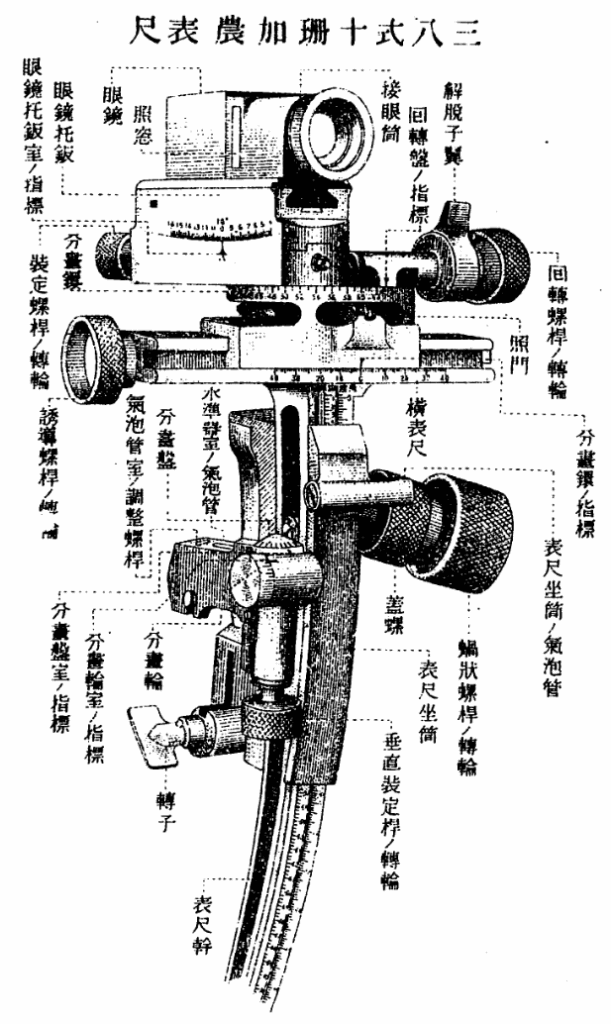
Perhaps the oldest sight used on a Japanese tank was the optic for the Type 38 15cm Howitzer, which was modified into the Type 4 15cm Self-Propelled Cannon (Ho-Ro).
While the gunner of the Ho-Ro utilized the 2x magnification “Ta” telescope described in the next section, the commander, positioned on the right side of the howitzer, also had a sight. This was the original box-type telescopic sight manufactured by Carl Zeiss which was retained from the obsolete Type 38.
The Type 38’s sight had a 4x magnification and a field of view of 10°. It was equipped to provide the potential for indirect fire at long range. Using this sight, the commander could calculate a firing solution for a target outside of visual range using positional data and relay the appropriate attitude of the weapon to the gunner.
Ta Model 1~5
タ一型~五型
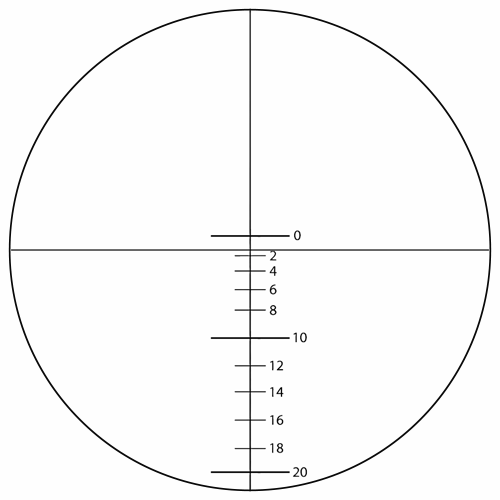
This telescopic tank sight was developed by Japan Optical Industries, or what is now Nikon. The company designation prefix for the sight, “Ta” (タ), stood for “Tank” (the phonetic tanku: タンク, rather than sensha).
It was used on virtually all early Japanese tank cannons, only differing in the spacing of the range gradations on the reticle to suit the velocity of its particular gun. Its official Army designation was the name of the weapon followed by “optic” (眼鏡). All of its gun-specific variants are as follows.
- Type 90 5.7cm Tank Cannon Optic (九〇式五糎七戦車砲眼鏡)
- Type 89 Medium Tank
- Type 94 37mm Tank Cannon Optic (九四式三十七粍戦車砲眼鏡)
- Type 95 Light Tank, Type 95 Heavy Tank, Type 97 Light Armored Car
- Type 94 7cm Tank Cannon Optic (九四式七糎戦車砲眼鏡)
- Type 95 Heavy Tank
- Type 97 5.7cm Tank Cannon Optic (九七式五糎七戦車砲眼鏡)
- Type 97 Medium Tank, Type 3 Light Tank
- Type 98 37mm Tank Cannon Optic (九八式三十七粍戦車砲眼鏡)
- Type 95 Light Tank, Type 97 Light Armored Car
- Type 4 15cm Self-Propelled Gun Optic (四式十五糎自走砲眼鏡)
- Type 4 15cm Self-Propelled Gun (Ho-Ro)
Prototypes were first developed of the Ta Model 1, Ta Model 2, and Ta Model 3. The standardized and mass produced model was the Ta Model 4, which was developed in 1933. The telescope had a 2x magnification with a 20° field of view. Range gradations were provided up to 2000 meters in 200 meter increments, with the crosshair zeroed at just under 200 meters.
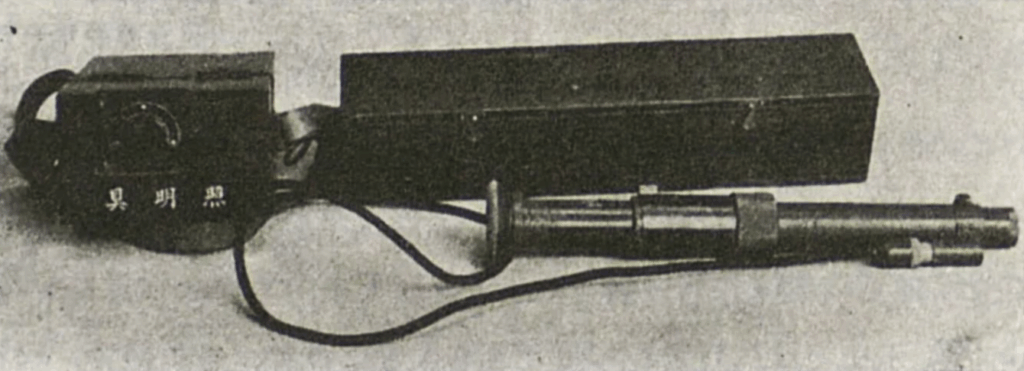
The optic was designed to resist shocks and vibrations, but there were frequent complaints about poor visibility. The company linked this to overtightening of the retaining rings, and developed the final Ta Model 5 in 1943 to address this issue.
Type 95 Sight (Kō)
九五式照準眼鏡(甲)
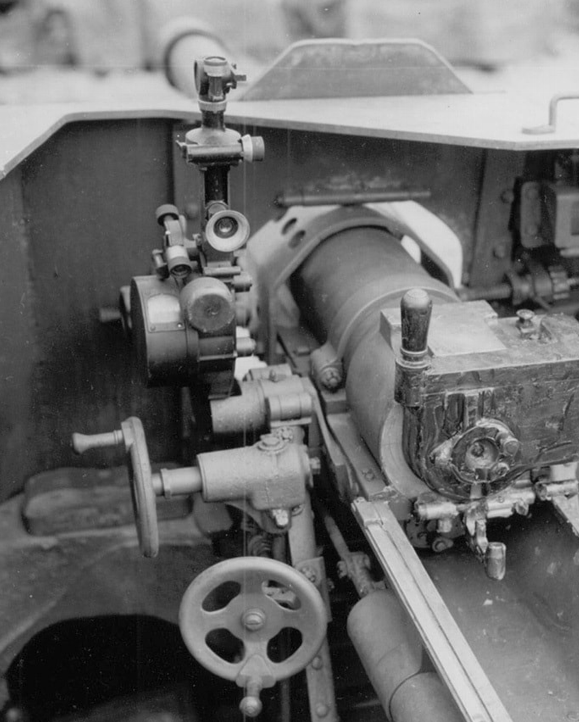
The Type 95 Sight (Kō) was a periscopic sight that was standardized for several Japanese artillery pieces, most notably the Type 90 Field Cannon. It was therefore inherited as the gun sight for the Type 1 7.5cm Self-Propelled Cannon (Ho-Ni I).
Although the original Type 91 10cm Howitzer of the Type 1 10cm Self-Propelled Cannon (Ho-Ni II) used the Tei subvariant of this sight, it seems that the Ho-Ni II used the Kō model.
The sight only differed in range gradations between these self-propelled guns. The version produced for the Ho-Ni II was called “Type 95 Sight (Kō) (For Type 1 10cm SPG)”(九五式照準眼鏡(甲)(一式十糎自走砲用)).
The Type 95 Sight (Kō) had a 4x magnification and a 10° field of view. Its line of sight was 180mm above the line of fire, and it was capable of both direct and indirect fire solutions.
Type 100 Sight
一〇〇式照準眼鏡
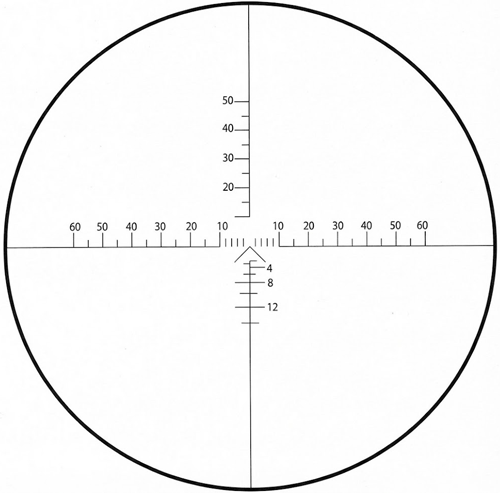
When Japanese light tanks moved to coaxial gun mounts, a new optic was also developed. The previous 2x magnification telescopic sight was criticized by the Army Tank School for being difficult to aim, particularly in motion. As a result, it was decided that the new telescope would have a higher magnification.
The Type 100 Sight was developed by the Tomioka Optical Instrument Works (later Kyocera Optec). Research on the new sight began in April 1939, and Tomioka completed the prototype in June 1940. The project was completed upon April 1941.
This sight was only produced for the following two weapon-specific variants (differing only by gradations):
- For Type 100 37mm Tank Cannon (一〇〇式三十七粍戦車砲用)
- Type 98 Light Tank
- For Type 1 37mm Tank Cannon (一式三十七粍戦車砲用)
- Type 2 Light Tank, Special Type 2 Motor Boat (Ka-Mi), Experimental Type 5 Medium Tank
The telescope was installed to the left of the 37mm cannon barrel, between it and the coaxial HMG. It had a large cushioning for protecting the gunner from shocks and facilitating aiming on the move. The magnification was 4x with a 13° field of view.
The target reticle was considerably more advanced than the likes of which were found on the previous 2x magnification telescopes. It consisted of an open reticle with a chevron zeroed at 0 meters. Range gradations extended to 1400 meters. Mil measurements were provided above and on each side for approximating the target distance and compensating for movement or windage.
Type 1 Sight (Kō)
一式照準眼鏡(甲)
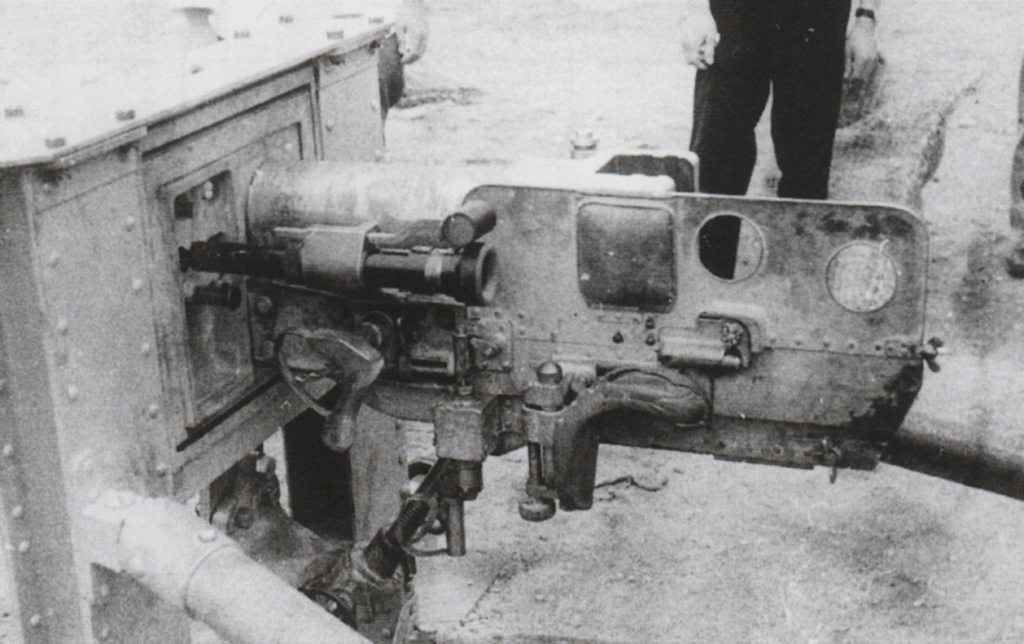
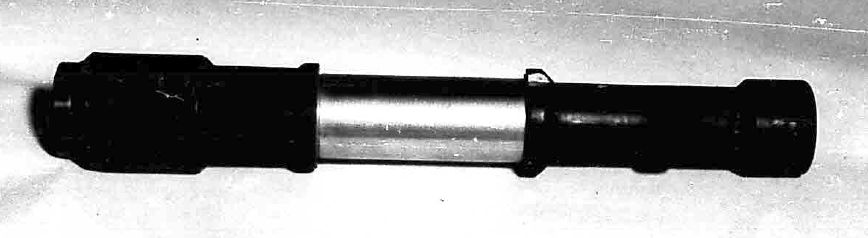
Development on a telescope for the Type 1 47mm Tank Cannon began in January 1940 at Tōkyō Optical Instruments (now Topcon). The prototype was completed in August of 1941, and the project was finished in January of 1942.
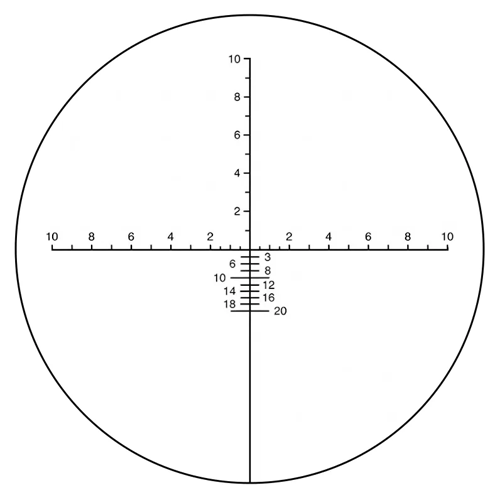
The Type 1 Sight (Kō) is designated as such to differentiate it from the model for the towed version of the 47mm cannon, which was the Otsu. The Kō had a 4x magnification with a 14° field of view.
This sight was produced in the following three weapon-specific variants (differing only by gradations):
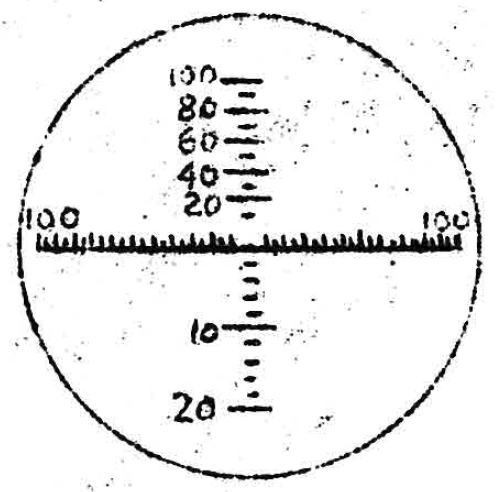
(approximated in US report)
- For Type 1 47mm Tank Cannon (一式四十七粍戦車砲用)
- Type 97 Medium Tank, Type 1 Medium Tank, Special Type 3 Motor Boat (Ka-Chi), Type 5 47mm Self-Propelled Cannon
- For Type 99 7.5cm Tank Cannon (九九式七糎半戦車砲用)
- Type 2 Cannon Tank (Ho-I), Ku-Se
- For Type 3 7.5cm Tank Cannon Model II (三式七糎半戦車砲II型用)
- Type 3 Medium Tank (Chi-Nu)
The Type 1 Sight (Kō) sight picture consisted of a closed crosshair with range gradations and vertical and horizontal mils. For the Type 1 47mm Tank Cannon, the crosshair was zeroed at 0 meters, and the range gradations spanned from 0 meters to 2000 meters (in increments of 300 meters from 0 to 600 meters, then in increments of 200 meters from 600 to 2000 meters). According to a postwar US report, there were also provisions for a reticle lighting device on the Type 1 Sight (Kō).
Type 3 7.5cm Tank Cannon Sight
三式七糎半戦車砲照準具
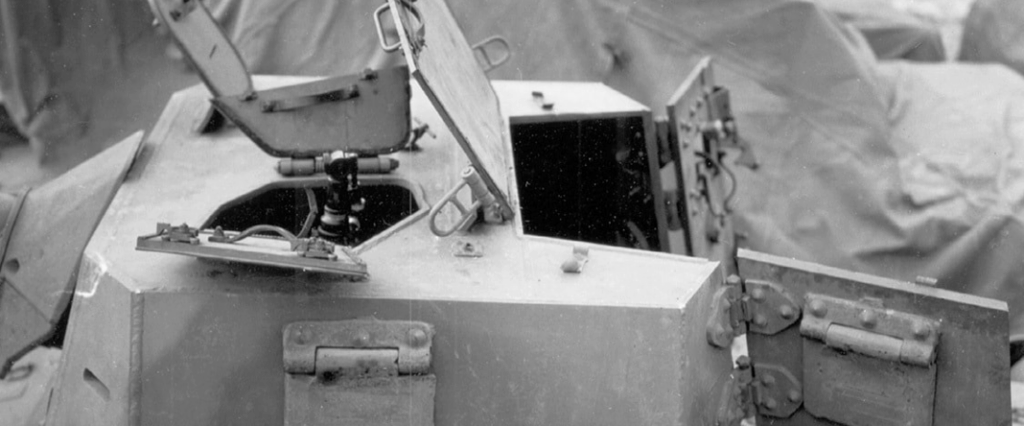
The Type 3 Cannon Tank (Ho-Ni III) was fitted with the Type 3 7.5cm Tank Cannon Model I. This weapon featured an improved periscopic sight over the previous Ho-Ni I & Ho-Ni II. In addition to this improved periscopic sight, direct iron sights were also installed on the left side of the gun cradle.
As the Ho-Ni III featured an enclosed superstructure, the new sight protruded from a hatch on the roof and was installed at a height of 300mm from the line of fire. It had a slightly higher magnification of 5x, reducing the field of view to 8°. The ranging scale was modified to increase the spacing between the markings from 0 to 2000 meters, allowing for more precise aiming at close targets compared to the previous Ho-Ni.
CH Mark 1 Sight
CH一号照準眼鏡
The final Japanese tank gunsight. The details surrounding this sight are largely unknown, but it appears that development work started in July 1943 with Tōkyō Optical Instruments as the development company. At the time of August 1943, it was scheduled for the prototype to be completed in March 1944, with testing in April. At the outset, the requirements were for a direct-sighting telescope with a magnification of 5~6x, and a field of view of 8~10°.
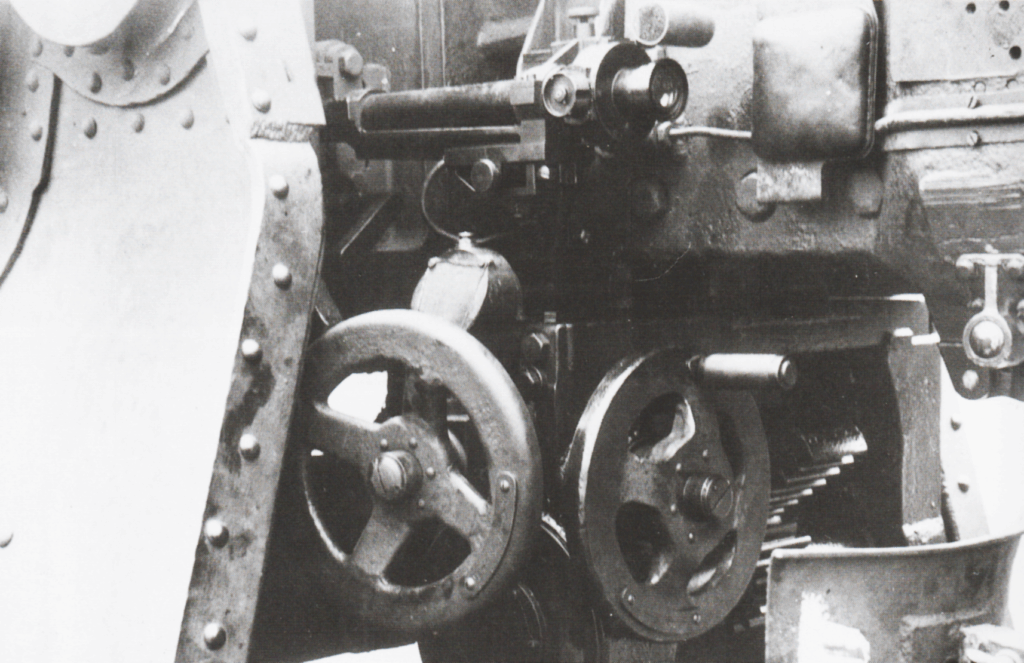
What ultimately resulted was the CH Mark 1 Sight, with a fixed magnification of 6x and a field of view of 8°. Range gradations were provided for up to 3000 meters, reflecting the high muzzle velocity of late-war Japanese tank guns that prioritized anti-tank performance.
There appears to be a range adjustment knob on the left side of the sight for adjusting the reticle, which seems to be the first appearance of such on a Japanese telescopic direct tank cannon sight.
There is evidence that this sight was developed for the following weapons, differing in range gradation:
- Experimental 7.5cm Anti-Tank Cannon Model I (試製七糎半対戦車砲I型)
- Experimental 7.5cm Anti-Tank Self-Propelled Cannon (Na-To)
- Experimental 7.5cm Anti-Tank Cannon Model II (試製七糎半対戦車砲II型)
- Experimental 7.5cm Anti-Tank Self-Propelled Cannon (Na-To)
- Experimental 7.5cm Tank Cannon (Long) Model I (試製七糎半戦車砲(長)I型)
- Experimental Type 5 Medium Tank (Chi-Ri)
- Experimental 7.5cm Tank Cannon (Long) Model II (試製七糎半戦車砲(長)II型)
- Experimental Type 4 Medium Tank (Chi-To)
- Experimental 10cm Anti-Tank Cannon (試製十糎対戦車砲)
- Experimental 10cm Anti-Tank Self-Propelled Cannon (Ka-To)
- Experimental 10cm Tank Cannon (Long) (試製十糎戦車砲(長))
- Experimental Cannon Tank (Ho-Ri)
Mass production plans were proceeding at the end of the war for the mass production of the CH Mark 1 Sight for the guns of the Chi-To and Na-To, included in the list above. Some production records alternatively designate this sight the “Shi H Mark 1 Sight”「シH一号照準眼鏡」.
PERISCOPES
Auxiliary observation devices were essential for the situational awareness of the tank crew while buttoned up. This includes fixed periscopes for the driver and fixed or rotating panoramic optics for the commander. These optics were generally not linked to the armament. While periscopes were standardized for many Japanese tanks from an early point, it appears that their actual use was highly limited.
Tank Panoramic Optic
戦車用パノラマ眼鏡
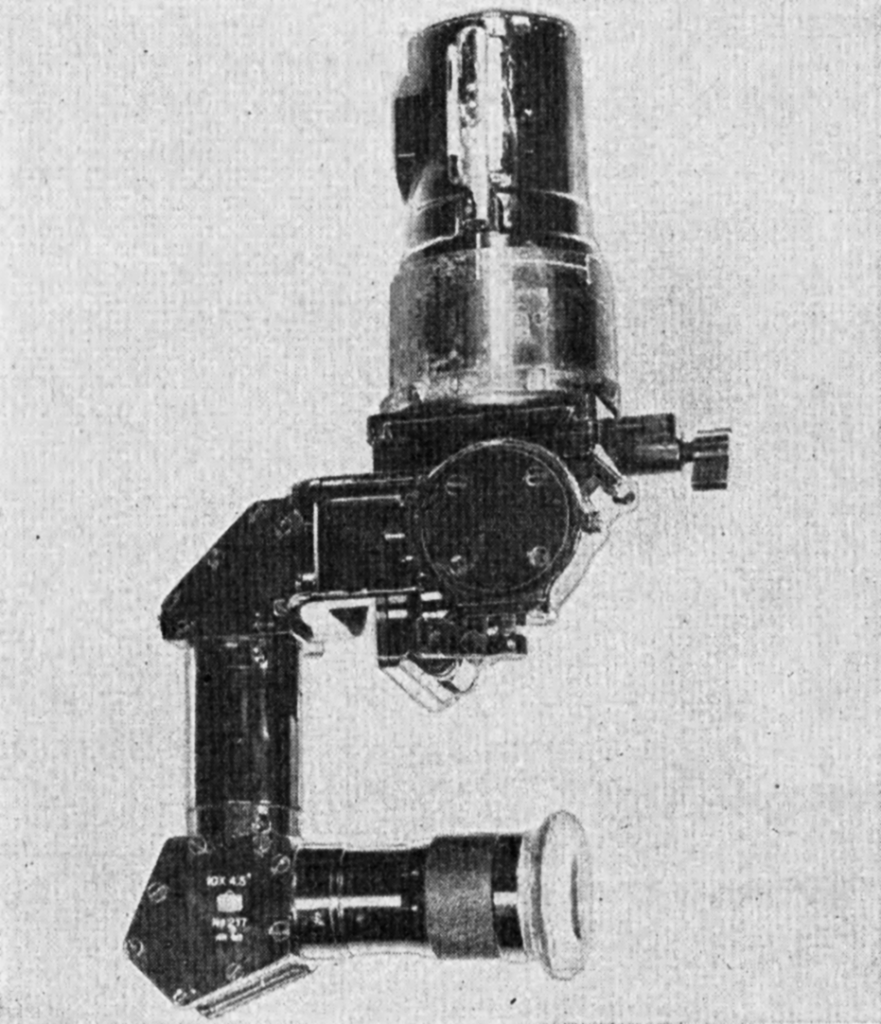
Unique to the Type 97 Medium Tank (Chi-Ha) in its original 57mm tank cannon configuration was the “Tank Panoramic Optic”. This was a periscope for the commander installed in a rotating armored mount at the top of the cupola (centered, as part of the folding hatch design).
In daytime conditions, this optic could be used to project its view image onto the inside of the cupola for observing the outside situation indirectly. However, in low lighting conditions or as desired, the optic could be rotated toward the commander for direct observation.
The Tank Panoramic Optic had a very high, fixed magnification of 10x, and a narrow field of view of 4.5°. It’s not entirely clear, but it is often stated that it was unpopular and seldom used due to various factors such as difficulty of use, complexity, or lack of production.
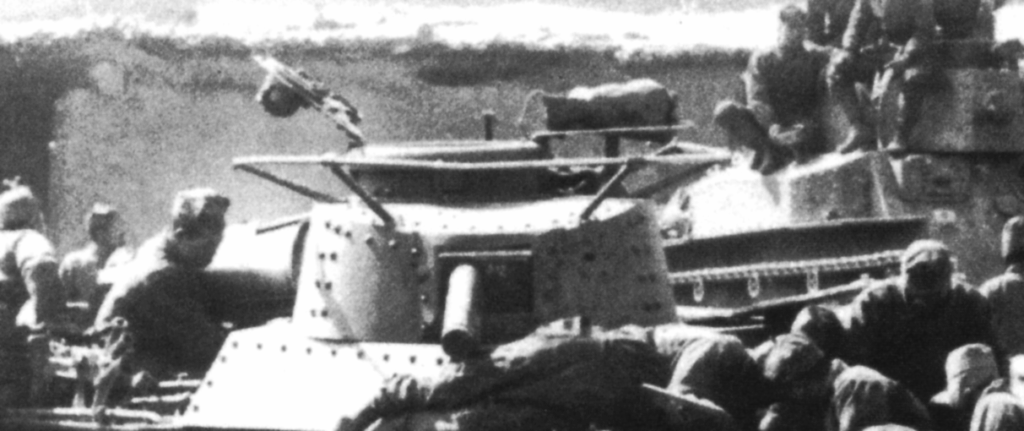
Tank Periscope
戦車用潜望鏡
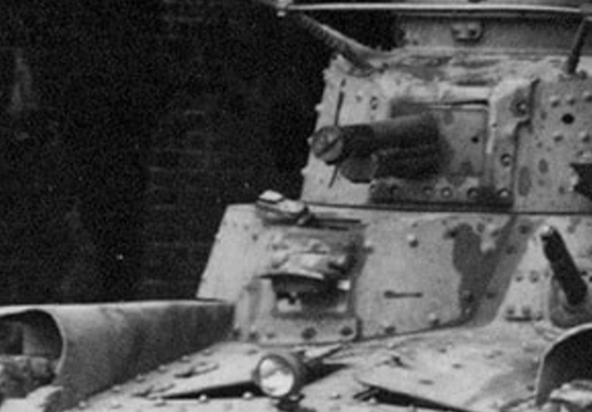
Although it is practically impossible to find an example of one in use, the simply named “Tank Periscope” was standardized for the Type 97 Medium Tank (Chi-Ha) from the very beginning of its service life. The purpose of the periscope was to provide overhead vision for the driver, and the hinged mounting port was provided on the inclined part of the roof of the driver’s station.
In addition to the Type 97 Medium Tank and most of its derivatives, it was also present with a single mounting slot above the gunner’s position on the Type 1 Medium Tank (Chi-He), two slots (one for the commander and one for the gunner) on the turret roof of the Type 3 Medium Tank (Chi-Nu), and a single slot on the left side of the gun for the gunner of the Type 4 Medium Tank (Chi-To).
According to US reports, this periscope was essentially a counterpart to the US Army M6 Periscope that was used in many American tanks of the era. It had a 1x magnification and was fixed in its mounting position, but could be easily removed and replaced. It was purely an observation device, and did not function as a gun sight.
Tank Periscope (Long Model)
戦車用潜望鏡(長型)
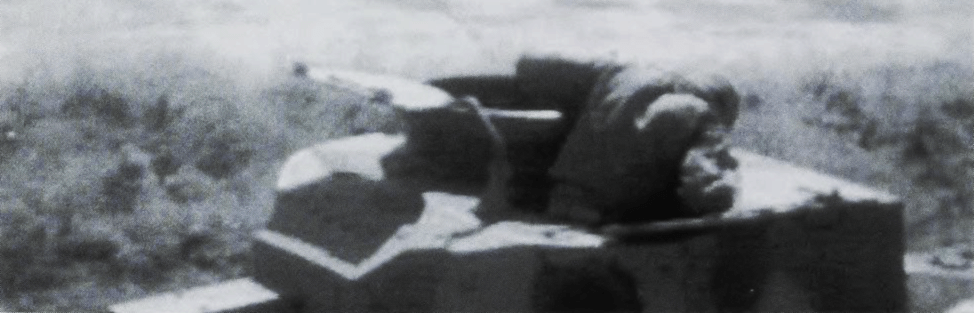
The Tank Periscope (Long Model) is one of the most mysterious Japanese tank optics. Its details are entirely unknown, other than that it was planned to be used as the gunner’s periscope of the Type 1 Medium Tank (Chi-He).
The research plan for the Type 1 47mm Tank Cannon Model II originally called for “including a periscope for the gunner”. Given that this periscope is implied to be a part of the weapons system, I am tempted to speculate that the Tank Periscope (Long Model) was likely a secondary overhead gunsight for the gunner.
If accurate, it was likely a 1x magnification periscope with a reticle that was linked to the vertical traverse of the Type 1 47mm Tank Cannon Model II. This would be analogous to the periscopic gun sight of early M4 Sherman tanks.
However, it is unclear if this sight was actually mass produced and used in the Chi-He. It appears that its production was abandoned by FY1945, and all of the fixed periscopes produced for tanks that fiscal year were the standard “Tank Periscope”.
Type 2 Tank Periscope
二式戦車用潜望眼鏡
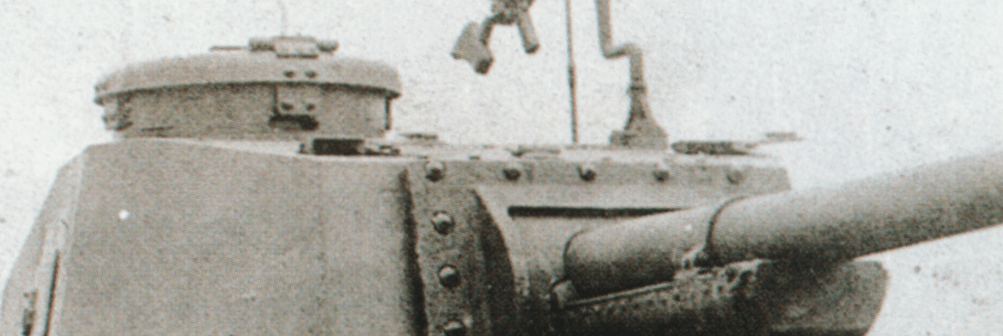
The Type 2 Tank Periscope was the replacement for the Tank Panoramic Optic that was first standardized on the 47mm turret version of the Type 97 Medium Tank (Chi-Ha), and was a considerably more practical device. It was installed in a similarly shaped rotating armored mount, although it was now positioned ahead of the cupola rather than on top of it.
Compared to the Tank Panoramic Optic’s high fixed 10x magnification and 4.5° field of view, the Type 2 Tank Periscope featured a variable magnification. Using a lever, the commander could switch between 2x magnification with a 25° field of view and 8x magnification with a 6.25° field of view.
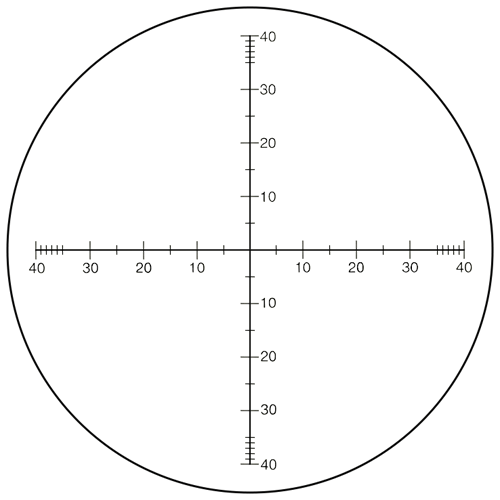
The reticle was a simple crosshair with large gradations every 100 mils up to 400 mils, smaller gradations at the half points, and additional smaller gradations for every 10 mils between 350 and 400 mils.
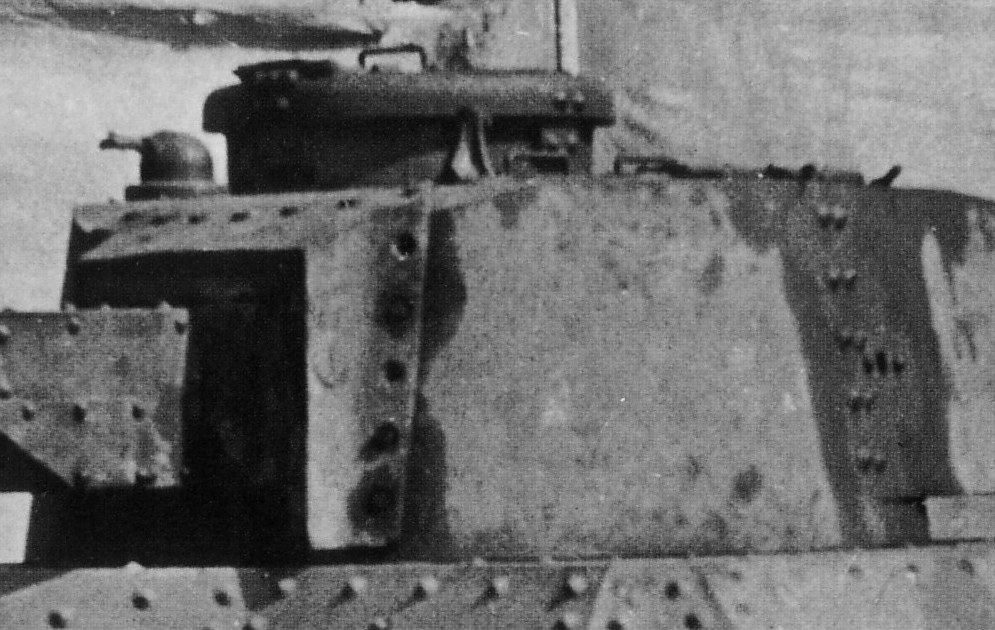
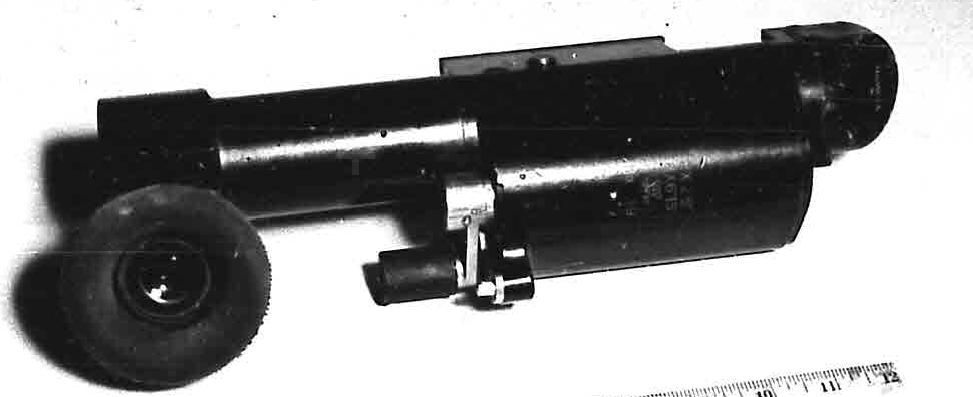
In addition to the Type 97 Medium Tank (Chi-Ha), the Type 2 Tank Periscope was also fitted to the Type 1 Medium Tank (Chi-He), Experimental Type 4 Medium Tank (Chi-To), and Experimental Type 5 Medium Tank (Chi-Ri). In all instances the periscope mount was located just ahead of the cupola, offset toward the outside of the tank.
RANGEFINDERS
Stereoscopic rangefinders were rarely used for Japanese tanks, which typically relied on stadiametric ranging via reticle gradations. However, specific prototypes incorporated these optical instruments to facilitate accurate fire at ranges exceeding the practical limits of standard estimation.
Type 93 Field Light Rangefinder
九三式野戦軽測遠機
The Type 93 Field Light Rangefinder was the primary stereoscopic rangefinder used by Japanese Army field light artillery units. It was developed by Japan Optical Industries (later Nikon), and was designed to measure range at distances of 100 to 10000 meters.
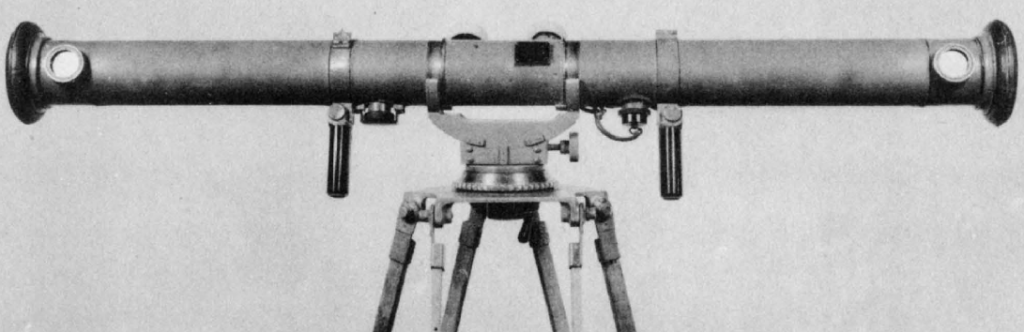
Based on its base length of approximately 75 centimeters, it seems that this was the rangefinder used on the prototype of the Type 1 7.5cm Self-Propelled Cannon (Ho-Ni I). The device was installed on the commander’s side, and would be used to measure and relay the range of targets to the gunner. Its optic had a 12x magnification and a 3° field of view.
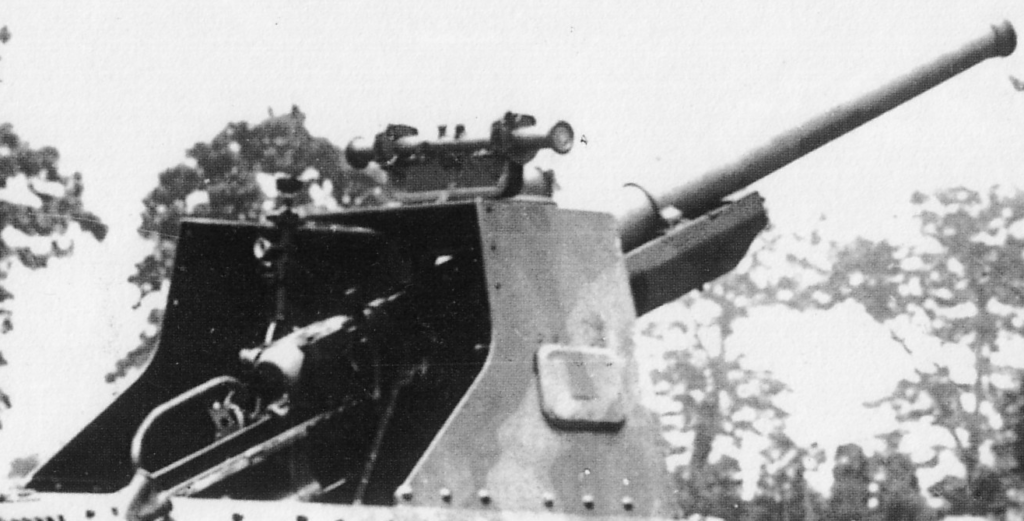
Ultimately, no production Japanese tank (that wasn’t a purpose-built observation vehicle) would employ a rangefinder for the armament. However, the Ho-Ni I prototype was not the last attempt. An existing side blueprint of the experimental cannon tank Ho-Ri shows a rangefinder equipped in the commander’s cupola. While it is not specified which model this is, it is likely that it is the same model. The Ho-Ri was under prototype construction at Mitsubishi Heavy Industries Maruko Factory when the war ended.
MACHINE GUN SIGHTS
Secondary armament optics were characterized by low magnification and wide fields of view. These sights were designed to accommodate the dual-purpose intentions of Japanese vehicle-mounted machine guns, utilizing specialized reticles that, in theory, allowed for the engagement of both ground targets and low-flying aircraft. While many of the tanks of other nations emphasized a high volume of machine gun fire for the suppression of infantry, Japanese tank MGs were treated as defensive precision weapons, relying on accurate aiming with telescopes for a comparatively low sustained rate of fire.
Type 91 Vehicle-Mounted Light Machine Gun Optic
九一式車載軽機関銃眼鏡
The 6.5mm Type 91 Vehicle-Mounted LMG was used as secondary armament for the bulk of the production Type 89 Medium Tank (I-Gō), the Experimental Type 91 Heavy Tank (second prototype), the Type 92 Heavy Armored Car, and early production units of the Type 95 Light Tank (Ha-Gō). It was also the sole armament of the early production units of the Type 94 Light Armored Car (Ho-Gō).
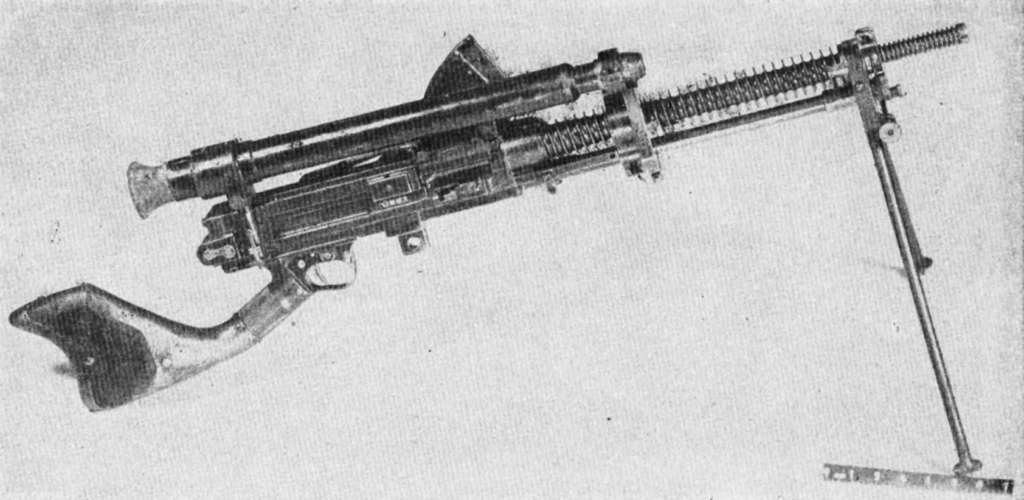
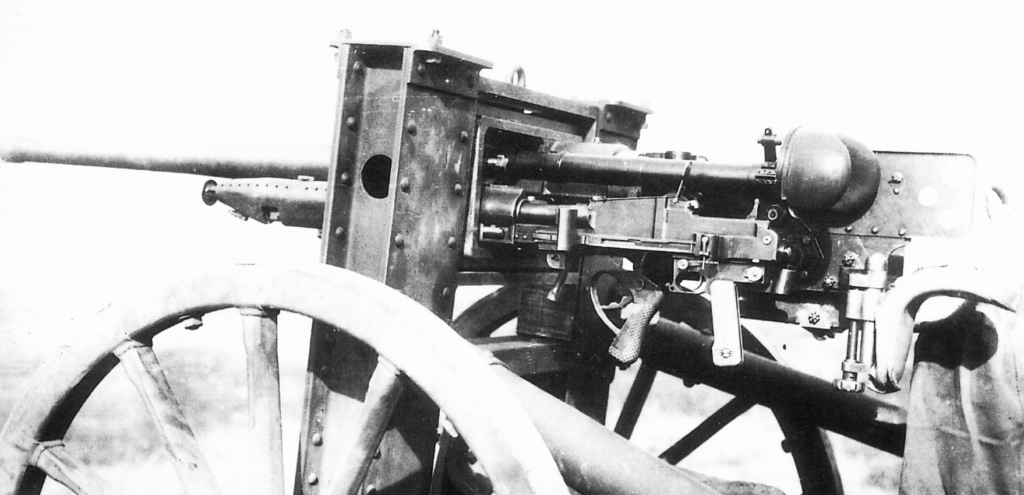
The Type 91 Vehicle-Mounted LMG was sighted using a 1.2x magnification telescope with a 30° field of view. The sight picture was a crosshair with a double ellipse, zeroed at 300 meters with gradations for 500 meters and 700 meters. The purpose of the ellipses was for targeting low-flying, low-speed aircraft. For this purpose it could be removed from its hull-installation and mounted on an anti-aircraft mount.
Type 92 Vehicle-Mounted 13mm Machine Cannon Optic
九二式車載十三粍機関砲眼鏡
The Type 92 Vehicle-Mounted 13mm Machine Cannon was only ever used on one vehicle – the Type 92 Heavy Armored Car. Despite the fact that it was a hull mounted weapon, it could be elevated to an extremely high angle, and so was also considered a potential anti-aircraft weapon. Like other Japanese vehicle-mounted MGs, it was also designed with use outside of the vehicle mount in mind.
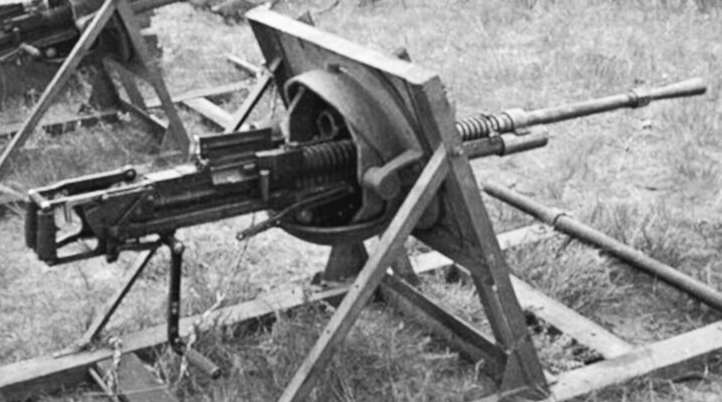
The gun was aimed using a large non-magnified telescope with a 50° field of view, mounted above and to the left of the barrel. The sight picture was a crosshair with three concentric ellipses corresponding to aircraft speeds of 150km/h, 200km/h, and 250km/h. Range gradations were provided up to 1500m. Unique to this weapon’s telescope was a bending joint which enabled the gunner to aim at aircraft while operating the gun at an extremely high angle.
Type 97 Vehicle-Mounted Heavy Machine Gun Optic
九七式車載重機関銃眼鏡
The 7.7mm Type 97 Vehicle-Mounted HMG is the classic Japanese tank machine gun. Making a list is pointless – this gun was used by every single Japanese tank produced from 1938 which featured a mounted machine gun. Although a replacement was developed, it was never superseded in production until the war ended.
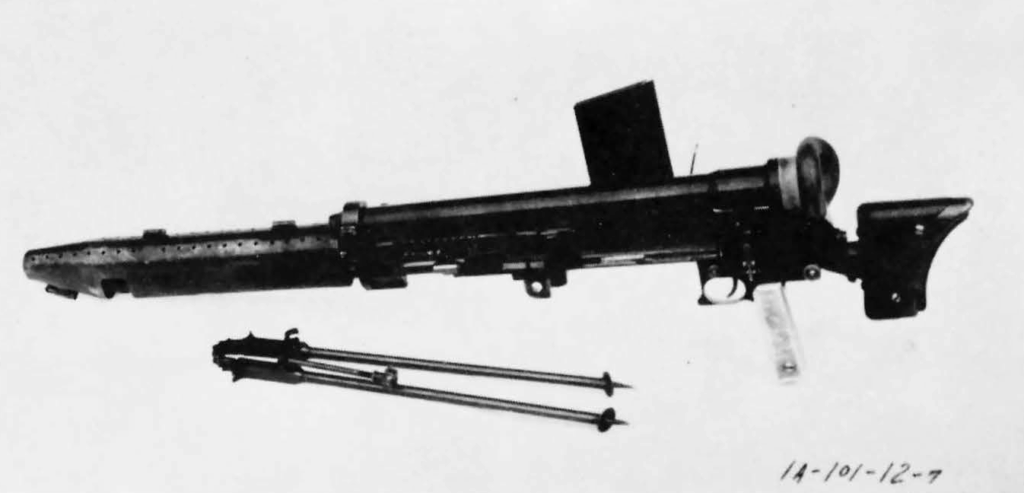
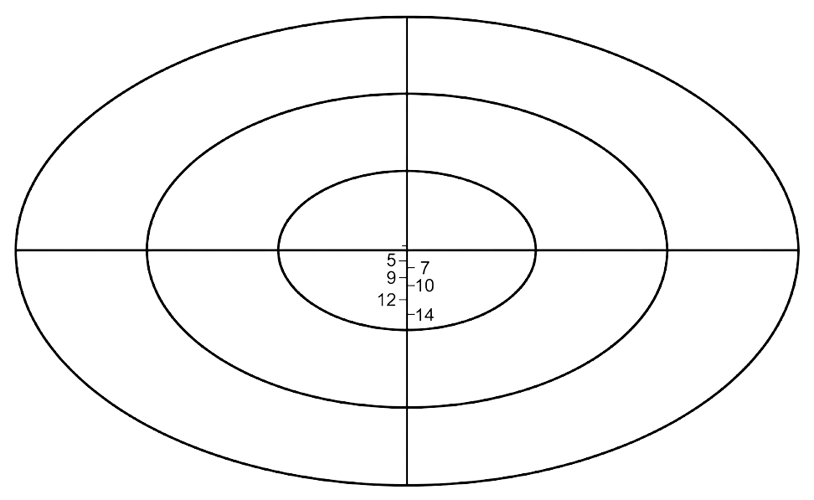
Development of the optic started in 1935 and it was standardized in 1938. Compared to the prior Type 91 Vehicle-Mounted LMG, the Type 97 Vehicle-Mounted HMG featured an improved 1.5x magnification telescope with a field of view of 30°. The telescope was developed by the Tomioka Optical Instrument Works, and featured an exceptionally effective fog-resistant characteristic. The cushioning was significantly more robust than that of the Type 91’s optic.
The sight picture was a simple crosshair surrounded by three concentric ellipses. The crosshair itself was zeroed at 300 meters, with range gradations of 200 meters (with a very small mark at the top left of the crosshair intersection), 500 meters, 700 meters, 900 meters, 1000 meters, 1200 meters, and 1400 meters. The 3 concentric ellipses were provided to, optimistically, aim at aircraft flying at 100 km/h, 200km/h, and 300km/h at a distance of 600 meters.
Sources
- 重砲兵照準教範草案 (May 1912)
- 狙撃砲取扱法草案附図送付方の件 (13 May 1918)
- 九五式照凖眼鏡(甲)(乙)(丙)(丁)制式制定の件 (1936)
- 試製九九式七糎半戦車砲説明書
- Foreign Materiel Volume 3 (Jul 1943)
- 兵器生産基本教程 第12巻 (眼鏡) (Aug 1943)
- 各種戦車裝備武器竝観測器材一覽表 (1 Oct 1943)
- Handbook on Japanese Military Forces, TM-E 30-480, C6, Changes No. 6 (15 Sep 1945)
- Japanese Telescopic Sights (1946)
- Japanese Periscope Sights (1946)
- 兵器を中心とした日本の光学工業史 (1955)
- 砲兵沿革史 第3巻 (1962)
- 日本光学工業五十年史 (1977)
- 日本の大砲 (1986)
- 歴史群像 Vol.34: 戦車と砲戦車 (2001)
- 日本陸軍の火砲: 歩兵砲 対戦車砲 他 (2011)
- 日本の重戦車 (2016)
- まけた側の良兵器集 (2020)
- 日本の機関銃写真集 (2020)

Great piece of research on Japanese tank optics! Thanks for sharing.
The pic of Type 1 Sight is wrong.
Check this:
【二战日军97式坦克炮瞄准镜(战地5同款)-哔哩哔哩】 https://b23.tv/704KKJy
Thank you for your comment. I see that I made an oversight with the design of the reticle and first photograph of the sight. I will correct the article soon.
qaz, do you by any chance know about the Army Type 1 37mm anti-aircraft gun? It was developed as a manual controlled (Saki I) or electrically controlled (Saki II). It`s last iteration had magazine ammo boxes. The Ta-ha AA tank would have it in a twin mount, apparently.
Hi Carlos,
I do have various information, data, and drawings for this gun. Were you looking for anything in particular?
Hi Qaz, anything you have on this equipment is most welcome. I am especially interested in the electrically controlled (Saki II). I do have something on the “Keki” fire control system, used with 20mm AA, but I`m not sure if it was intend for the 37mm Army Type 1. Also, on the Ta-ha, do you know how it would be controlled (Joystick?).